Betty Wright McEntire
Under the Banner of HeavenBetty Wright McEntire is Brenda Wright Lafferty’s older sister and one of the book’s principal family witnesses. Through memories of their closeness, Brenda’s efforts to resist the Lafferty brothers’ control, and her own painful hindsight, Betty gives personal weight to the contrast between what Brenda’s family understood and what they did not know before her death. Her recollections also mark the limits of that knowledge: Betty recognized Brenda’s determination and distress, but did not know about the abuse or the brothers’ plans when she might have helped her leave.
Family and Early Closeness
Betty was the older sister of Brenda, the second oldest of seven children raised by LaRae Wright and Jim Wright. She remembered Brenda as outgoing, lively, and full of personality, and described the two sisters as best friends. Her recollections of Brenda’s school years reinforce that sense of a young woman at ease in public life: Brenda participated in student government and the drill team, excelled academically, and was first runner-up in the 1980 Miss Twin Falls Pageant.
The sisters’ closeness continued when Betty was abroad on a mission in Argentina. Brenda wrote to her every week while she was dating Allen Lafferty. Betty understood from those letters that Brenda was serious about him in a way she had not been about earlier boyfriends. She saw Allen as charismatic and remembered the Laffertys as a family widely known in Provo. Her account of the courtship is therefore affectionate but not uncritical: Betty knew Brenda loved Allen, while later events made her reassess what that love had cost her sister.
Brenda’s Resistance and Betty’s Understanding
As the Lafferty brothers embraced fundamentalist beliefs and demands, Brenda resisted pressure to conform. Betty recalled that Brenda urged the other wives to think for themselves and defend their rights, and that she challenged Ron and Dan in theological discussions. Her education and confidence, Betty believed, made the brothers wary of her influence. At only twenty-three, Brenda was someone the other women looked to for support, despite being younger than many of the adults around her.
Brenda also tried to limit Allen’s involvement with his brothers. She kept him from joining Onias’s School of the Prophets, though she could not prevent him from continuing to associate with Dan and the others. When Betty and her younger sister Sharon visited, Brenda arranged for one of them to accompany Allen whenever he went out, then asked them where he had gone and whom he had spoken with. Betty initially found this unusual. In retrospect, she understood it as Brenda’s effort to keep track of Allen’s contact with his brothers and to guard against their influence.
Betty’s account does not make her a fully informed observer of the marriage. She described Brenda’s effort to defend the other wives and her watchfulness over Allen, but did not know the full circumstances at the time. That gap becomes especially important in her recollection of the night Brenda said she planned to leave.
The Uncompleted Departure
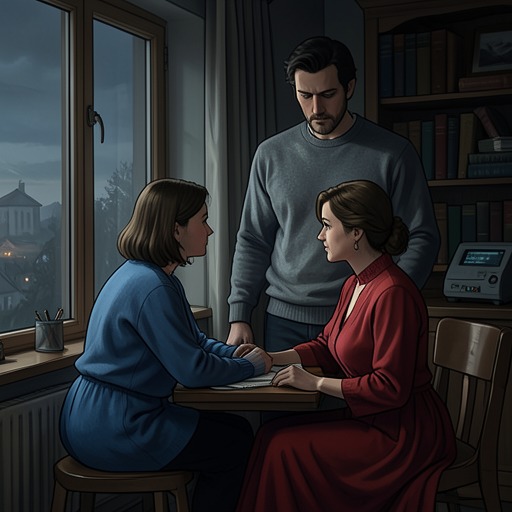
Toward the end of winter in 1984, Brenda called Betty after midnight and asked her to meet at a McDonald’s between Salt Lake City and American Fork, Utah. There, Brenda told her she intended to leave Allen. She had secretly saved money and planned to move to Montana, live with her grandparents, find work, and care for her baby on her own. Betty was surprised by the seriousness of the situation. She did not know that Allen had been beating Brenda, or that Brenda was involved in a conflict surrounding the School of the Prophets; she and her family learned those details later through Brenda’s journals.
Betty’s immediate response became a source of lasting regret. Not understanding how bad things were, she told Brenda that, since she was married, she should try to work things out. Brenda soon changed her mind and stayed with Allen. Betty later explained that Brenda loved him, did not want to give up, and hoped she could save him from his brothers. She also wanted the marriage to work for the sake of their baby, Erica. Betty’s recollection holds these reasons alongside the missed opportunity: she believes her parents would have taken Brenda and the child back to Idaho if they had known the truth.
About two months later, LaRae received another distressed call from Brenda asking whether she could come home. Her parents said yes, but when LaRae called again that evening, Brenda said she and Allen had worked things out. She did not return to Idaho. Betty’s account of these two appeals shows how a possible escape came close more than once, while the family’s incomplete understanding left them unable to respond to the danger as it was unfolding.
What Betty Learned Afterward
Betty later learned that Ron had spoken of a revelation identifying Brenda and a baby among those he intended to have removed. She first heard the details twelve years later, when Ricky Knapp testified in court. She was particularly shocked to learn that Claudine Lafferty had been present as Ron and Dan discussed the planned killings, yet Betty had not received a warning that could have reached Brenda. Her response was not simply grief at the information itself; it was bewilderment that people who knew of the threat had not told her sister.
She was equally unable to reconcile Allen’s silence. Betty believed that if he had told Brenda about Ron’s revelation, Brenda would have left and remained alive. She regarded a husband’s responsibility to protect his wife and child as something Allen had failed to fulfill, and she described his silence as a betrayal of Brenda’s trust. Her judgment was shaped by the knowledge that he had heard of the threat but did not warn her. The book presents this as Betty’s conviction and enduring anger, not as a claim that she had known the revelation’s details at the time.
The Last Visit and Narrative Role
On July 19, Brenda’s twenty-fourth birthday, Betty offered to drive to American Fork, Utah, and care for Erica so that Brenda and Allen could go out. Betty was looking forward to seeing her sister and niece; Erica, then almost fifteen months old, had begun saying her first intelligible words. After dinner in Salt Lake City, Brenda and Allen returned having apparently argued. Betty could tell Brenda had been crying, but understood that she should leave rather than intrude. She remembered giving Brenda a music box, which Brenda wound up and placed on the television stand, and then kissing Erica goodbye. It was the last time Betty saw her sister.
Betty’s role in the account is shaped by the tension between intimacy and belated knowledge. She knew Brenda as a lively, ambitious sister and heard her plans to leave, but did not know the extent of the danger or the information withheld from her. Her memories preserve concrete moments of sisterly closeness—the weekly letters from Argentina, the nighttime meeting, the birthday visit—while her later testimony and reflections expose the consequences of silence. The result is not merely a portrait of bereavement: it is an account of how warnings, family trust, and a narrow window for escape became inseparable in Betty’s understanding of what happened.